The SDF Shifts Strategy After Aleppo Defeat
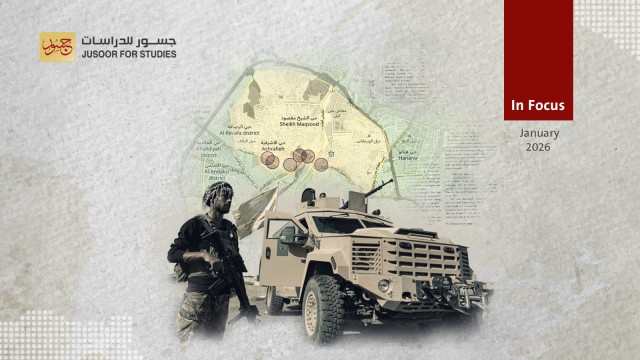
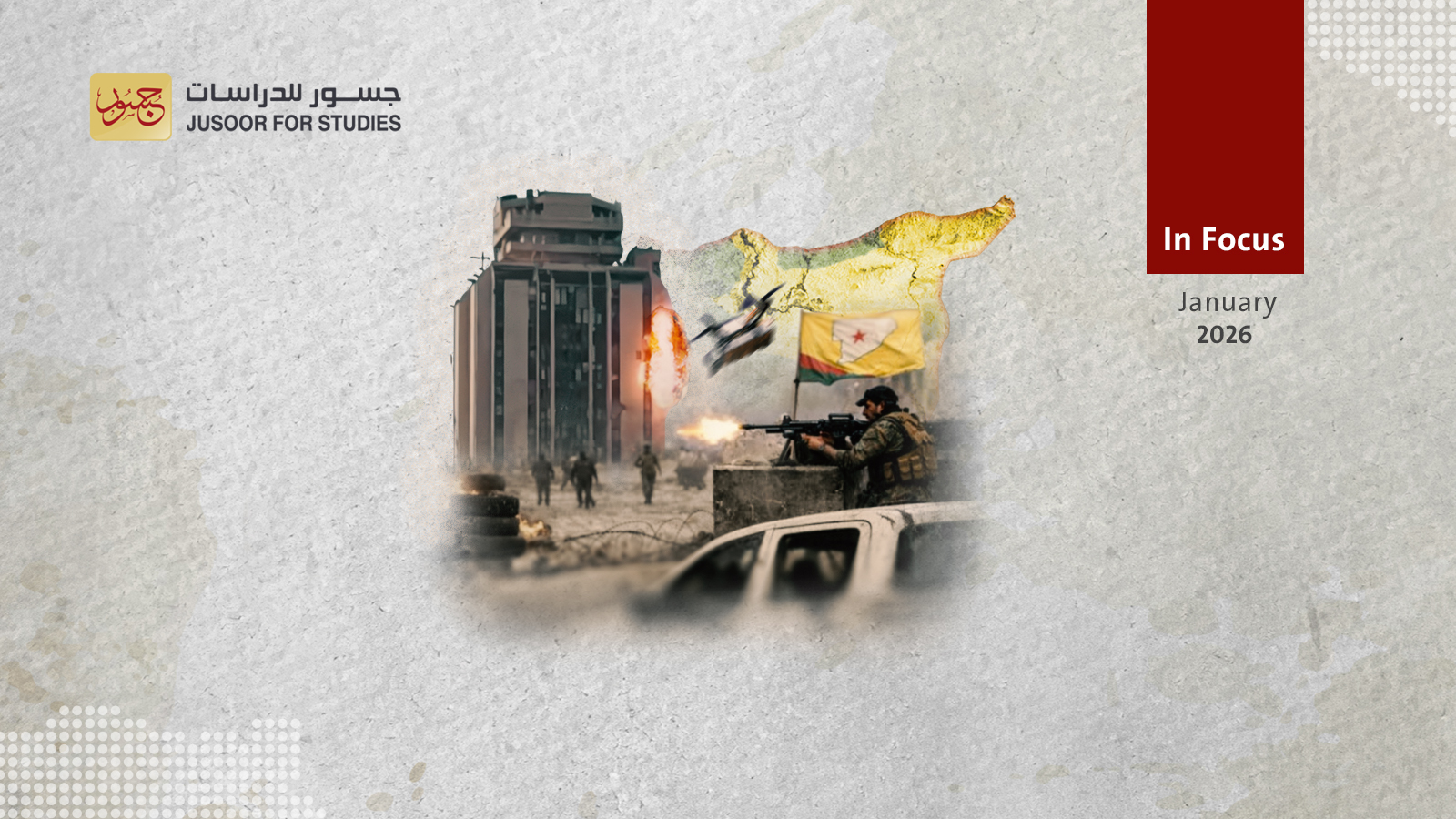
On January 11, the Syrian Democratic Forces (SDF) lost control of the neighborhoods of Sheikh Maqsoud and Ashrafieh in Aleppo, ending a 14-year presence in Syria’s second city. The Assad regime had handed control of the Kurdish-majority districts to the People’s Protection Units (YPG), the armed wing of the Democratic Union Party (PYD)—itself the Syrian branch of the Kurdistan Workers’ Party (PKK)—which formed the backbone of the SDF.
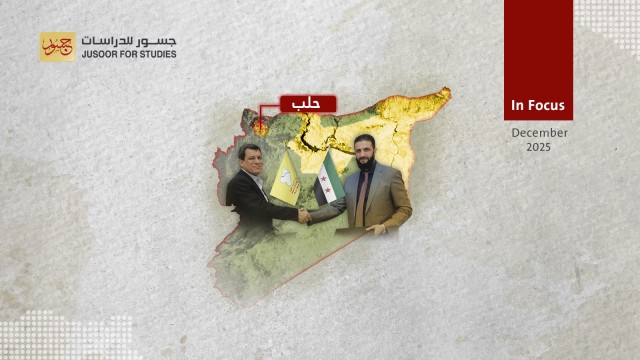
The SDF was forced to accept a complete withdrawal from Aleppo, as the Trump administration supported the Syrian government taking control of the SDF-held neighborhoods. This effectively nullified an agreement reached in April last year, leaving only the March 10 deal between the Syrian government and the SDF in place.
Should another military clash erupt between the two sides, Washington is likely to support the Syrian government again, meaning that the SDF is unlikely to pursue any such battle northeast of the River Euphrates. Having withdrawn from Aleppo, the group is likely to withdraw from all areas west and south of the Euphrates, in line with U.S.-Turkish agreements reached in 2018, including the “Manbij Map,” and a deal between Russia and Türkiye signed the following year.
The SDF is expected to adopt a new strategy, avoiding direct military confrontations, which have failed to win international support despite the low risk they pose to the International Coalition against Daesh and its focus on combating the Islamic State group (IS). This is especially relevant in the eastern regions of the country, where IS remains active and poses a threat that the international coalition continues to counter, as demonstrated in a recent operation that coincided with the SDF’s withdrawal from Aleppo on January 10.
Having lost the battle in Aleppo, the SDF is likely to pursue a strategy including the following steps:
· Continuing negotiations over the implementation of the March 10 Agreement, in an effort to project a positive image to the international community, while simultaneously stalling for time and imposing new obstacles and conditions to prevent the Syrian state from entering areas east of the Euphrates. The SDF is also likely to avoid handing over the area’s oil and gas fields, so as to continue funding its operations and paying its personnel, as well as refusing to relinquish control of border crossings to facilitate the continued flow of weapons and fighters into Syrian territory and the smuggling of oil.
· Shifting to a strategy of sabotage operations, such as launching drone attacks on both military and civilian facilities, while avoiding being held responsible by blaming IS, rogue elements or defectors. The group has already put this strategy into action, with an attack on the governorate headquarters in Aleppo; it may also target civilian airports in Damascus, Aleppo and elsewhere in order to disrupt air traffic across Syrian airspace. The SDF may also carry out suicide bombings; plant improvised explosive devices (IEDs); detonate car bombs in crowded civilian areas to terrorize the civilian population; and sabotage power transmission stations and oil pipelines, as well as water supply stations and pipelines and other facilities. The goal here is to cripple the economy and the provision of basic services, fanning public discontent against the government by portraying it as incapable of maintaining security and improving economic conditions and living standards.
· Relaxing oversight of prisons housing IS members and camps housing their family members, allowing them to escape and rejoin IS cells in the Syrian desert—then blaming the government on the grounds that the SDF is preoccupied with defending itself against threats from the Syrian army.
· Forming alliances with militias led by Druze cleric Hikmat al-Hijri in Suwayda and the remnants of the Assad regime in the coastal region. Following the battle of Aleppo, all three groups are keenly aware that they will not receive any international support if they continue to engage the government in direct military confrontations, meaning they are likely to resort to sabotage instead.
For its part, the Syrian government is expected to ask the U.S. to withdraw all the heavy weaponry it supplied to the SDF during the fight against IS, and request help to monitor Syria’s airspace and prevent the SDF from using drones. The government is also expected to launch operations similar to the one it carried out in Aleppo, in order to clear all areas west and south of the Euphrates River (in the Aleppo, Raqqa, and Deir Ezzor governorates) of any SDF presence, effectively turning the Euphrates into a natural barrier and imposing strict controls on river crossings to prevent the infiltration of subversive elements into Syria.
In conclusion, as a branch of the Marxist PKK, the SDF believes in violence and the armed struggle it has waged against Türkiye for decades. Accordingly, given the failure of its separatist political project to carve out a swathe of Syrian territory on which to establish its own autonomous Kurdish region in northeastern Syria, the PKK will place Syria, rather than Türkiye, at the heart of its sabotage operations. In doing so, it will exploit the weakness of the Syrian government after long years of civil war. This demands that the government put in place a preemptive strategy to respond to the SDF’s next steps.