Deadly Raid Stamps Israel’s Mark on Southern Syria
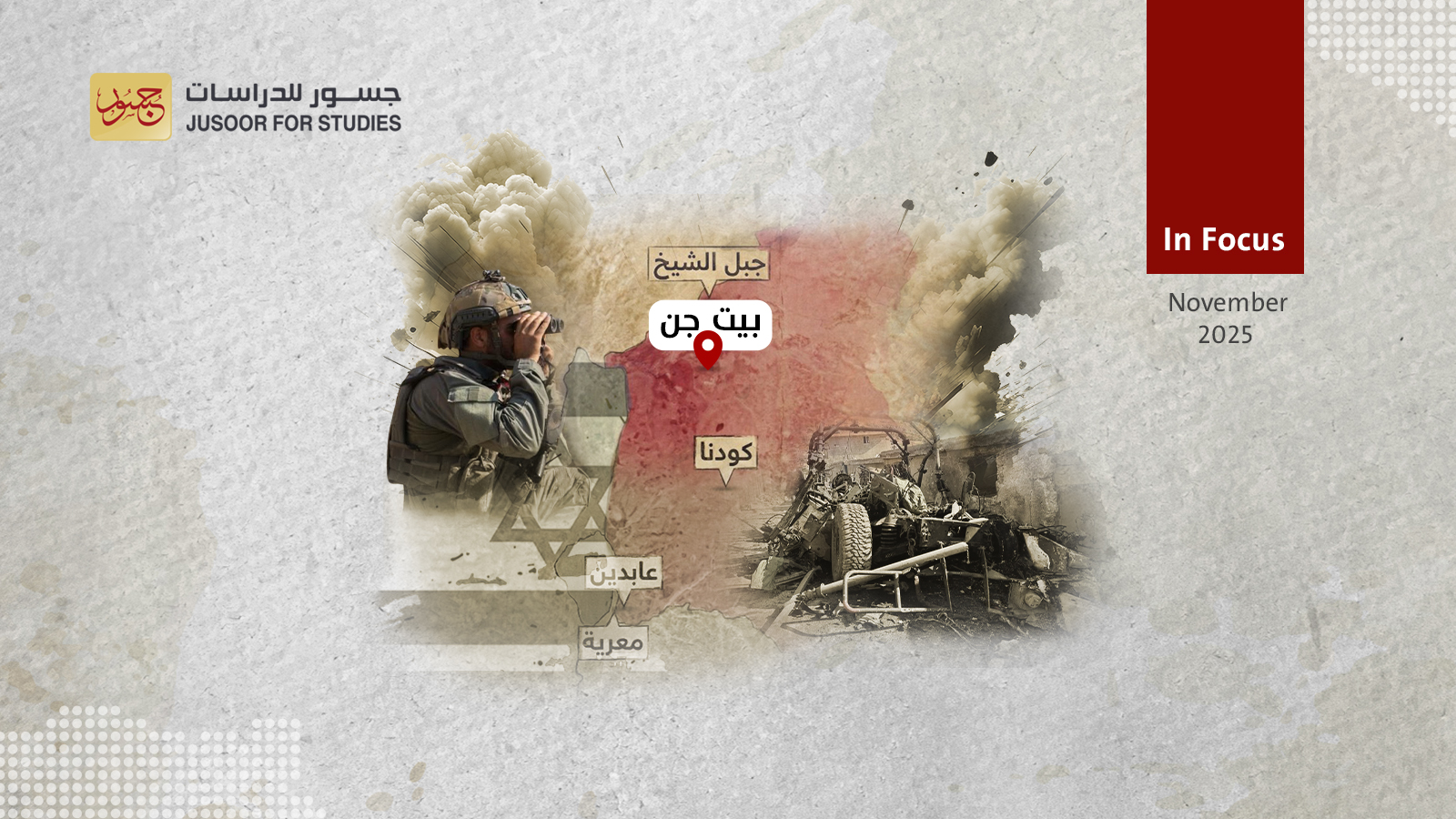
In the early hours of November 28, Israeli ground forces raided the Syrian town of Beit Jinn, south of Damascus, supposedly in pursuit of individuals belonging to the Palestinian militant group Islamic Jihad. When residents attempted to repel the incursion and prevent the soldiers from detaining anyone, Israel responded with heavy fire and sent in military helicopters, killing 11 residents.
The operation came a day after Israeli Defense Minister Yisrael Katz claimed that Islamic Jihad fighters, along with fellow Palestinian militants Hamas and Yemen’s Houthis, were active in southern Syria.
The raid came as relations between Syria and Israel appeared to be heading for calm, following President Ahmed al-Sharaa’s visit to the U.S., where he met President Donald Trump at the White House. Israel’s unprecedented ground incursion and bombardment of Beit Jinn threatened to spark an escalation.
The first indication that such a move was imminent appeared at the UN Security Council on November 19, during a session to discuss the political and humanitarian situation in Syria. Unusually, an Israeli representative attended the session, engaging in a heated exchange with his Syrian counterpart and bitterly criticizing President al-Sharaa.
The Israeli diplomat accused Damascus of adopting the “radical” ideology and hate speech of Hamas, which he claimed was the cause of the October 7 attacks. He insisted that Israel would neither allow such attacks to be launched from Syria, nor permit the presence of militias on its borders; he also called on Syria to demonstrate its willingness to coexist through concrete actions rather than slogans.
Israel clearly intended the Beit Jinn operation to send several messages. The raid was Israel’s biggest incursion into the town since the fall of the Assad regime on December 8 last year, and was accompanied by air support, unlike three previous operations, which were aimed at capturing militants but did not involve bloody clashes with residents.
The Beit Jinn operation appears to have had several goals:
• To express opposition to Trump’s approach to dealing with the new Syrian government. Israel sees Trump’s reception of President al-Sharaa in Washington, the lifting of sanctions against the Syrian leader, and the suspension of sanctions on Syria as a whole as hasty steps that should have been taken after the signing of a peace agreement that meets Israeli demands, not before. Israel’s escalation in southern Syria therefore aims to sabotage or recalibrate the relationship between Washington and Damascus.
• To object to a joint Russian-Turkish-Syrian patrol which took place in southern Syria in coordination with the U.S. on November 17. Israel rejects any Turkish presence in the south, and will not accept any international political approach that leads to a limited security agreement or an amended version of previous security agreements. Rather, Israel seeks a comprehensive peace agreement.
• To exploit the crisis among Syria’s minorities, following demonstrations in the coastal region and Homs, which the Syrian government handled calmly. Israel is aiming to incite chaos by showing its support for minority communities and offering to protect and assist them. This was echoed by its representative at the Security Council, who said that Israel’s intervention in support of the Druze in Suwayda province was justified due to “genuine historical ties” between Israel and the religious minority. The Beit Jinn operation was also intended to portray the Syrian government as weak, thus encouraging minority groups to continue rebelling against Damascus.
• To turn back the clock on progress by the new government in the year since the fall of the Assad regime. Israel wants to undermine the new administration, destabilize Syria’s security, prevent its recovery and economic growth, and obstruct international engagement with the new rulers in Damascus.
• To influence the new regime’s domestic and foreign policies. The Israeli representative at the Security Council said his government had helped bring the new regime to power in Syria, through its wars on Gaza and Iran, as well as Hezbollah and other Iranian proxies in the region. Israel thus believes that the new regime owes it a peace treaty, rather than merely a return to the Disengagement Agreement signed after the 1973 Yom Kippur war something similar.
In summary, the Beit Jinn operation raises the prospect of a more complex scenario in Syria. Israel, having faced international condemnation over its genocide in Gaza, may seek to extend its footprint in its northeastern neighbor beyond Beit Jinn, in order to have the final say over the future of southern Syria—to the exclusion of both Washington and Damascus. Finally, Israel’s government, the most extreme right-wing coalition in its history, wants to capitalize on the transitional period in Syria and impose a peace agreement on its own terms.