
Washington’s New Vision for Syria
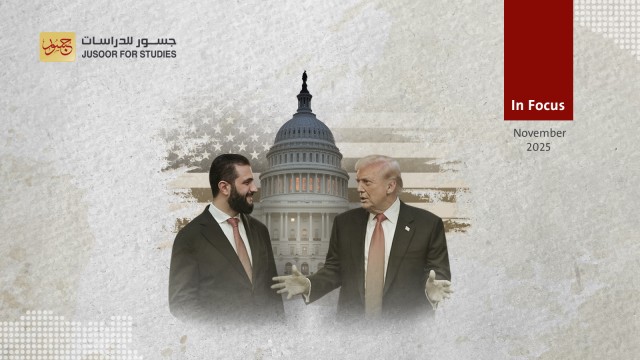
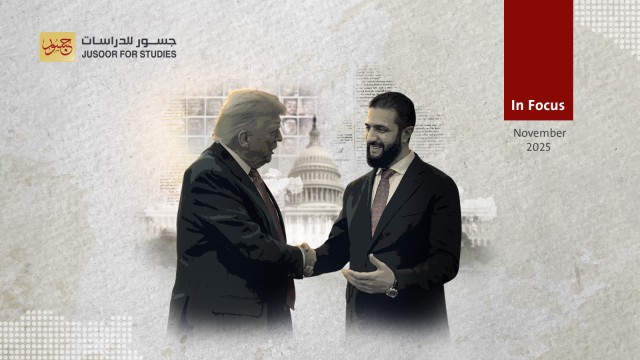
The U.S. is accelerating the process of normalizing its relations with Syria, particularly since President Donald Trump met Syrian President Ahmad al-Sharaa in Riyadh in May. Trump also announced that Washington had decided to lift sanctions, and has appointed the U.S. Ambassador to Türkiye, Thomas Barrack, as his Special Envoy to Syria.
Barrack began his mission by meeting Al-Sharaa in Istanbul, then visited Riyadh, Amman, and Damascus—where, in the presence of Syrian Foreign Minister Asaad al-Shaibani, he raised the American flag over his official residence. He subsequently met President al-Sharaa at the presidential palace and attended a signing ceremony for $7 billion-worth of contracts with Qatari, Turkish, and American companies, aiming to restore Syria’s electricity network to near-full capacity.
Trump has made a string of positive statements regarding the Syrian government, urging other states not to interfere in the country’s affairs but to grant it a new opportunity for stability, growth, and the restoration of its natural status in the world. He also announced his intention to remove Syria from the list of state sponsors of terrorism, which it has been on since 1979.
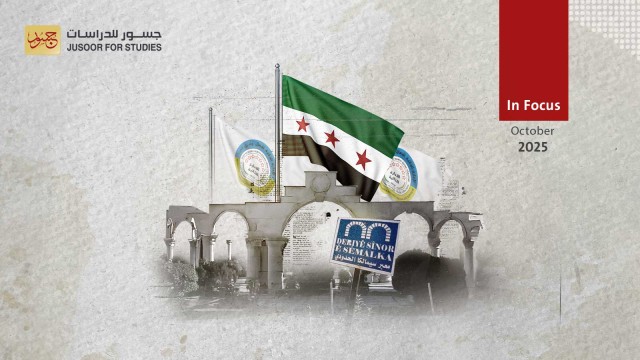
These steps open a new page in the history of tense relations between the U.S. and Syria, based on American support for the new Syrian government and rejection of interference in Syrian affairs by regional and international players. Similarly, Trump is giving Damascus a free hand to settle its issues with domestic constituencies, without supporting one party at the expense of another. This could block demands by certain actors seeking to carve out autonomy for their regions or establish their own cantons within the borders of the Syrian state.
Washington’s approach was evident in a tweet by the U.S. envoy a day after his meeting with Al-Sharaa in Istanbul, in which he vowed that his country would not repeat the mistake of the colonial-era Sykes-Picot Agreement.
That deal “was imposed by colonial powers a century ago to achieve their own gains, not to establish peace in the region,” Barrack wrote. “Sykes-Picot divided Syria and the broader region for imperial gain—not peace. That mistake cost generations. We will not make it again. The era of Western interference is over. The future belongs to regional solutions, but partnerships, and a diplomacy grounded in respect… Syria’s tragedy was born in division. Its rebirth must come through dignity, unity, and investment in its people.”
Barrack’s allusion to the Sykes-Picot Agreement sparked a debate about a shift in U.S. policy regarding existing borders in the region and the possibility they could be reconsidered. However, his statement effectively negated such notions. The U.S. does not want to repeat the mistake of Western interference in the affairs of the region and Syria, including redrawing national borders or partitioning existing states.
Indeed, it was not the first time the American envoy had expressed this view. In October 2016, just two weeks before Trump won his first term in office, Barrack had published in an article in Fortune magazine entitled “What the Middle East Needs Now from America.” In it, he criticized the Sykes-Picot agreement a century earlier and argued that to address the region’s problems today, Washington should support the new generation of Arab leaders in the UAE, Qatar, and Saudi Arabia: “brilliant young leaders are crafting forward-looking policies to effectively forge a new Middle East.”
“Like Asian rulers who launched the Tiger Economies of the mid to late 20th century, these new Arab leaders are searching for policies aimed at economic and educational development. Those policies are designed to reduce internal tensions and secure their countries’ rightful place in a future dominated by global trade,” he wrote.
The U.S. envoy believes that the rise of the Iranian Revolutionary Guard Corps (IRGC) four decades ago was another key cause of sectarian divisions in the region, and that it is in the interest of American allies including Egypt, Jordan, and Israel to end these divisions, as doing so would provide a counterbalance to the IRGC and its regional ambitions, fueled by Iranian ally Russia’s drive for more clout the region.
The fall of the Assad regime means that conditions are favorable—according to Barrack’s vision—for Syria to be part of this project, bringing hope for stability and growth. Iran’s influence is at a historic nadir, Arab-Turkish understandings are on a positive trajectory, and the new Syrian government has radically disengaged Syria from Iran, explicitly declaring its intent to abandon the Iranian-Russian axis and join the Arab-Western camp. Moreover, Turkish-American relations are recovering from the crises they experienced under the Biden administration.
This situation, along with Trump’s declared vision of non-interference in the affairs of the region and leaving it to its people who live there, “developing your own sovereign countries, pursuing your own unique visions, and charting your own destinies,” confirms that the U.S. is likely to adopt the same approach in Syria as it does with the Gulf states and Türkiye.
Washington is sending a clear message to the Syrian Democratic Forces (SDF) that it will not interfere in Syria’s domestic affairs or support any actor at the expense of any other. The Trump administration has declared its determination not to repeat the mistake drawing borders on paper that lead to interminable conflicts on the ground and threaten the stability of the entire region.
This reflects the departure of both Trump and his Republican Party from the traditional American vision—long championed by both the Republican and Democratic parties—of “nation-building,” which involved imposing American concepts of democratic values and human rights on other countries abroad, even if it required military intervention.
For Trump and his acolytes, nation-building has proven to be a failure. This view was evident in his first term (2016-2020), when he announced his intention to withdraw American forces from Afghanistan, Iraq, and Syria, seeing those conflicts not as civilizational but rather as conflicts of economic interests. This is driving Trump today to rebuild his alliances in order to confront China, his country’s largest economic competitor.
In conclusion, U.S.-Syrian relations appear to be entering a new phase in which they can genuinely contribute to Syria’s domestic stability and prosperity, as well as to international and regional stability, particularly regarding the many thorny issues inherited from the previous regime, such as the return of refugees, fighting the drug production and export trades, combating terrorism, the chemical weapons issue, and respect for human rights.