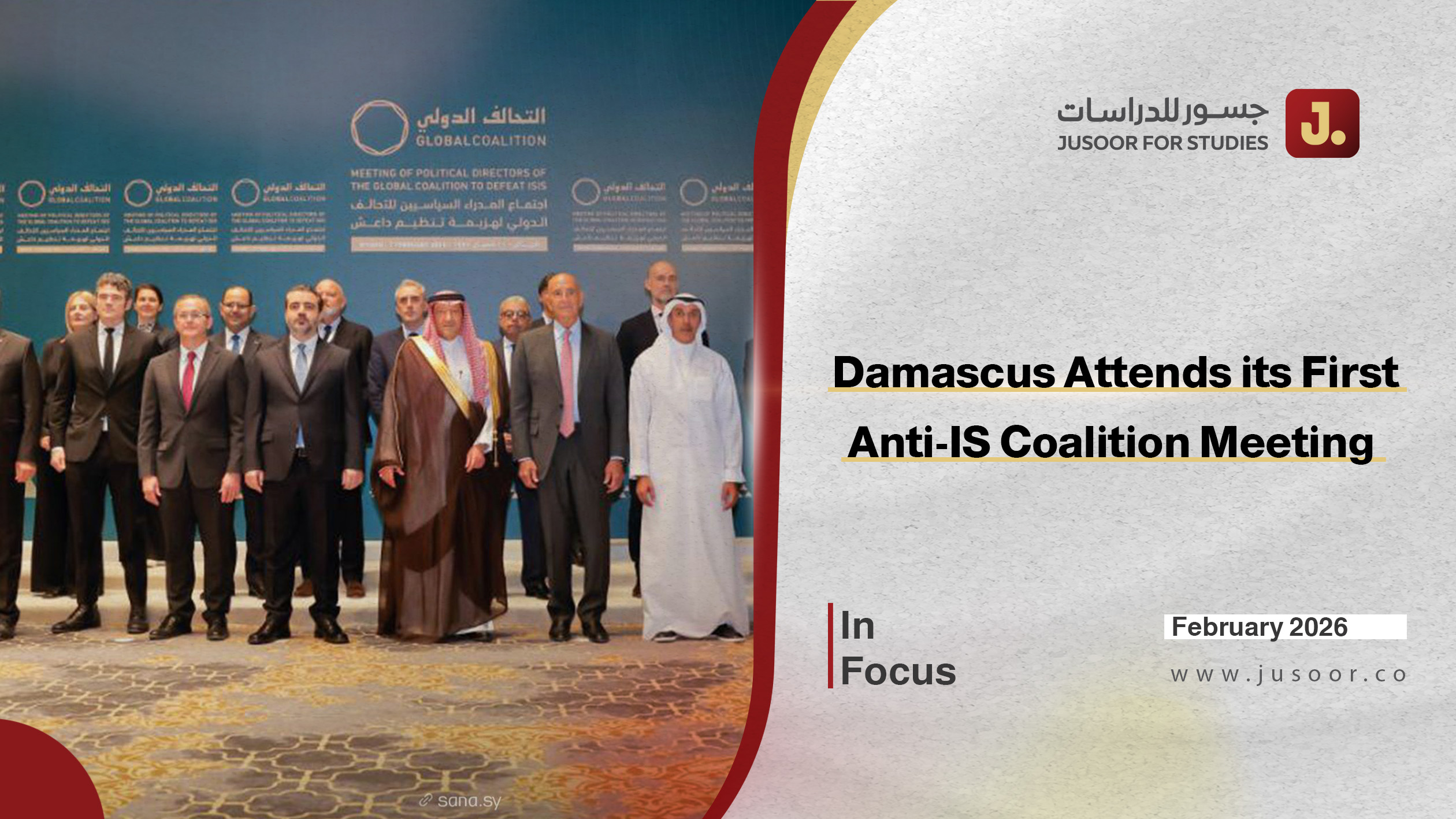
Damascus Attends its First Anti-IS Coalition Meeting
On January 9, the Syrian government attended a meeting of the Global Coalition Against Daesh for the first time since the alliance was formed in 2014. The situation in Syria dominated the final statement of the gathering in Riyadh, co-chaired by Saudi Deputy Foreign Minister El-Khereiji and Tom Barrack, Washington’s Ambassador to Türkiye and Special Envoy for Syria. The meeting, attended by political and military officials, followed Syria’s accession as the Coalition’s 90th member in November last year.
The final statement laid out the Coalition’s current priorities, which include supporting the Syrian government in assuming national leadership of efforts against the Islamic State group and taking responsibility for detention facilities and camps for internally displaced persons (IDPs) housing IS fighters and their families, as well as transferring IS detainees back to their countries of origin and reintegrating families from the Al-Hol and Roj camps back into their communities.
The statement indicates that the Coalition has decided to draw a line under these issues in Syria, beginning with the transfer of detainees to Iraq, while continuing to support the Syrian government in its counterterrorism efforts across the country. It also signifies the end of the coalition’s relationship with the Syrian Democratic Forces (SDF)—its local partner since the Coalition’s inception in 2014—on the grounds that there is no longer a need for the SDF as an armed organization, nor for the Autonomous Administration of North and East Syria, which had provided civil services to the region’s population after it fell outside the control of the Assad regime until the latter was toppled in late 2024.
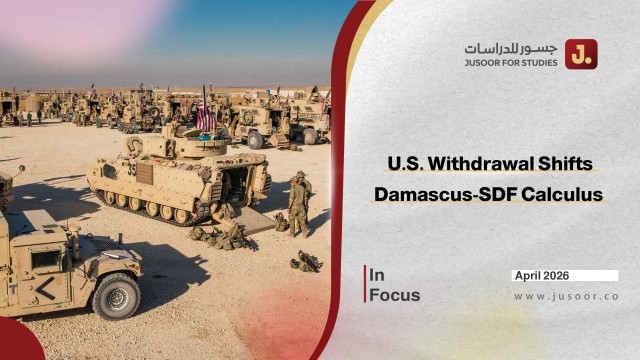
Once the detainees have been transferred and the camps dismantled, the U.S. is likely to withdraw its forces from Syria, as they did from the Al-Tanf airbase in mid-February. American forces remained in Syria after the end of military operations against IS in 2019, in part to secure prisons and camps holding IS fighters and their families.
The withdrawal of those forces will be linked to two other key developments. First is the withdrawal of U.S. and Coalition weapons supplied to the SDF for the fight against IS. The Coalition will not allow the SDF to retain these weapons, which could be used against the Syrian government; this will also be a primary demand of the Syrian government.
Second is a halt to the annual funding that the SDF had received from Washington. If continued U.S. support is needed to combat IS in Syria, it will be allocated exclusively to the Syrian government, given that the latter has now joined the coalition.
The Coalition’s expression of appreciation for the sacrifices made by the SDF in the war against IS is likely to be the last time it mentions the group. With this, the SDF becomes a purely domestic Syrian matter, and the international community’s role will be limited to supporting the implementation of a permanent ceasefire deal and arrangements for the civilian and military integration of northeastern Syria into the rest of the country. It appears that the SDF has little option but to go along with implementing the agreement.
Another striking point was evident as the Syrian government attended its first Coalition meeting: it attended as a full partner immediately upon joining the coalition. By contrast, the SDF, despite working alongside the Coalition for more than a decade, was represented neither its military officials nor its political administration. This indicates that the SDF was not an international partner, but rather an armed group, and that its participation did not imply a promise of support for any future political project.
It also confirms that the current French and American interest in sponsoring the negotiations between the SDF and Damascus is intended solely to facilitate the peaceful implementation of the agreement, nothing more. Accordingly, Coalition members will see any move by the SDF to delay its implementation will be seen as threatening regional stability.