U.S. Withdrawal Shifts Damascus-SDF Calculus
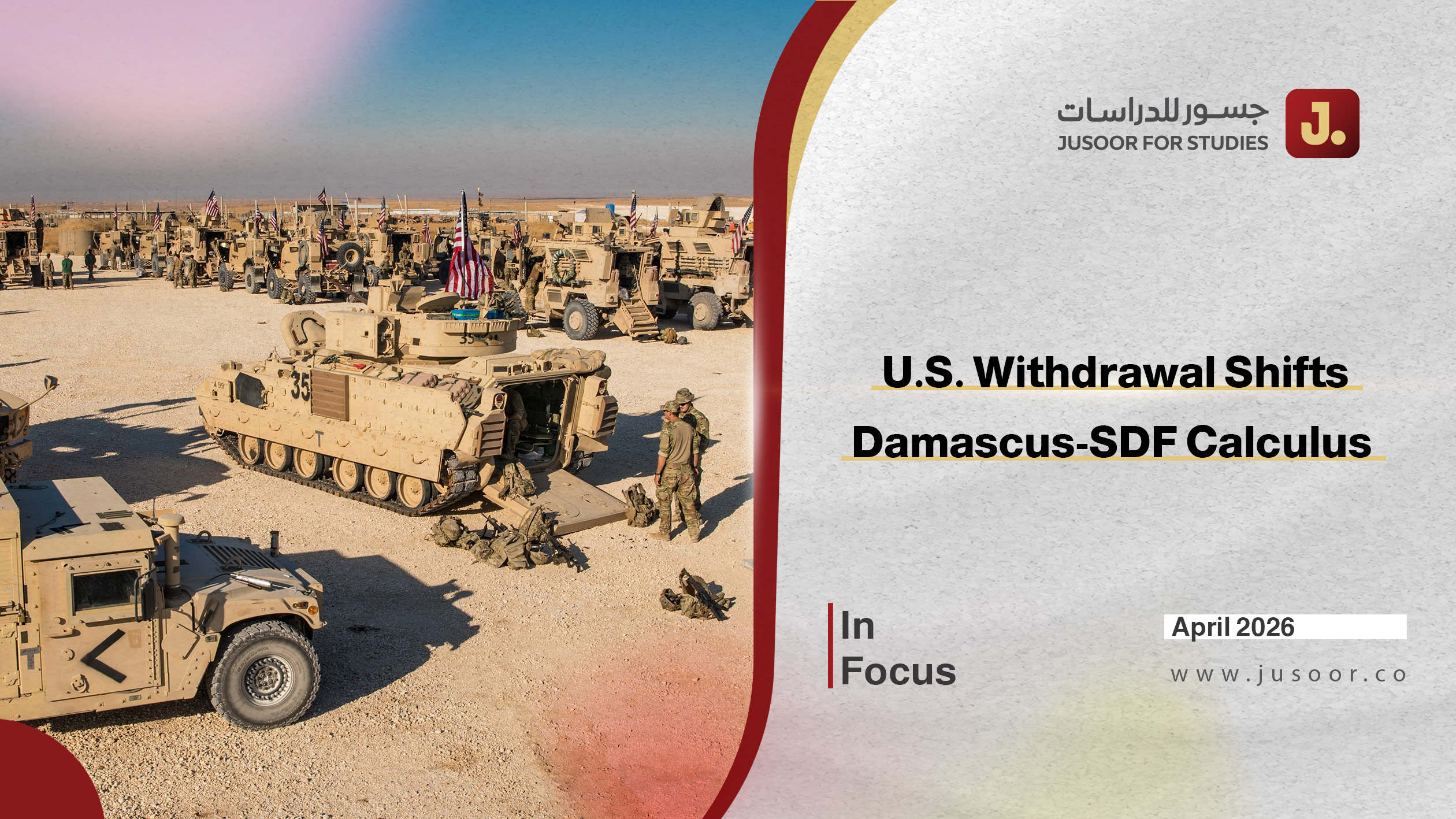
On April 16, the U.S. announced that it had finished withdrawing its forces from Syria and dismantling its last military base in the northeast of the country. This ended nearly 12 years of American deployment in Syria, starting with airstrikes against the Islamic State group in August 2014 then the formation of an international coalition against the group, which had captured Syria’s Raqqa and the Iraqi city of Mosul and declared the restoration of the Islamic caliphate.
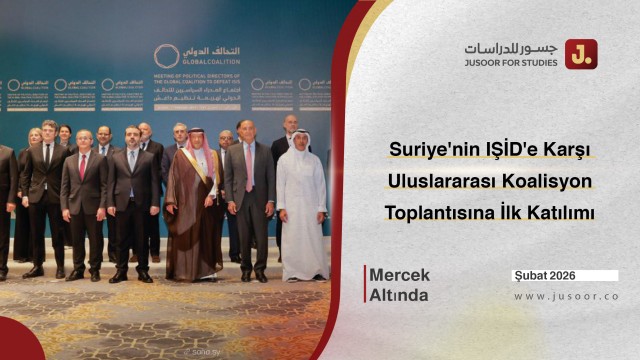
With the defeat of IS and the toppling of the Assad regime, three significant steps paved the way for a full U.S. withdrawal. Firstly, Syria’s new rulers joined the coalition in November 2025; second, Damascus completed the transfer to Iraq of IS fighters detained in Syrian prisons, after government forces regained control of most of northeastern Syria in January 2026; and finally, an agreement between Damascus and the Syrian Democratic Forces (SDF) has reached its final stages.
The U.S. withdrawal does not affect the Syrian government’s ability to combat terrorism. Its membership in the coalition ensures ongoing, direct coordination with coalition forces, sharing of intelligence, and enhanced security along the Syrian-Iraqi border. Furthermore, the withdrawal strengthens the government’s international legitimacy and help restore the sovereignty Syria lost under the Assad regime, which led to the deployment of hundreds of U.S., Russian, and Turkish military bases and outposts, in addition to Iranian and Tehran-affiliated militias, most notably Hezbollah. Thirdly, the withdrawal bolsters the government’s position should it demand that Russia and Türkiye also dismantle their bases and pull all their troops from Syria.
Domestically, the withdrawal strengthens the government’s negotiating position with the SDF, depriving the latter of its strongest bargaining chip, which the Kurdish-dominated force had leveraged for over a year to delay implementing a deal they had reached after the fall of the Assad regime and to push for SDF forces to remain a separate entity from the Syrian army. Therefore, the SDF is expected to agree to full integration, and will likely be compelled to hand over all the border crossings it had previously refused to relinquish.
The withdrawal will also strengthen the government’s leverage in talks over other areas of Syria, such as those with factions controlling the city of Suwayda, facilitating the implementation of the roadmap for that region—especially since Washington is a signatory, along with Amman and Damascus. The withdrawal will send similar messages to the remnants of the former regime in the coastal region, urging them to accept settlements and reconciliation deals offered by the government, and to lay down their arms. This will not spell an end to peaceful protests, which the international community will continue to push for the authorities to allow, so that Syria can fulfill Security Council Resolution 2254 by establishing credible, inclusive, and non-sectarian governance.
Despite the government’s stronger position, the possibility remains that other external powers will move to compensate for the “losses” involved in the American withdrawal. France has acted swiftly; its Chargé d’Affaires in Syria, Jean-Baptiste Faivre, promptly met the presidential envoy tasked with monitoring implementation of the SDF deal, Ziad al-Ayesh. Their meeting focused on integrating the SDF into state forces, and France expressed its readiness to help overcome any obstacles that might hinder that process, according to their public statements. This suggests a French attempt to fill the American void and mitigate the SDF’s losses.
The Syrian government will therefore seek to consolidate its gains from the U.S. withdrawal and prevent any other attempt at foreign intervention. It has already succeeded in preventing domestic issues from being “internationalized” by refusing to go to Paris for negotiations with the SDF. This aligns with the government’s general policy of minimizing international intervention in Syria’s domestic affairs. It continues to negotiate with the United Nations regarding the world body’s future role in Syria, and refuses to relocate the UN envoy’s office to Damascus. Furthermore, the dismantling of the SDF will be one of the most important factors facilitating the withdrawal of Turkish forces from Syria, since the SDF’s presence was the primary threat to Turkish national security.